

Welcome to The Rise – your weekly dose of circadian sunshine, decentralised health wisdom, and actionable tips to help you live healthier, stronger, and more empowered.
In the last 12 months, the 6,000+ people in this tribe have been reading something the other 99% of health newsletters won’t cover — the science your GP hasn’t read. Here’s what’s in this week’s issue and why it matters:
- The ancient practice that rivals blood pressure medication
- The fermented food scientists just discovered helps flush microplastics from your body
- What a 30-minute sauna actually does to your immune system
- The cellular repair crew your body activates every time you get hot and sweaty
- How to improve your gut health, the circadian way
Have suggestions or something you’d love to see covered here? Help me better serve this vibrant community of health rebels and send me your feedback here.
Much love and sunshine, ☀️
Sandy xx

Issue #117 • 26 April, 2026
🌅 Rise Report
This Ancient Movement Practice Rivals Blood Pressure Drugs
Your doctor probably didn’t mention this one to you…but did you know there’s an ancient Chinese practice, that rivals the blood pressure medication sitting in medicine cabinets all over the world right now?
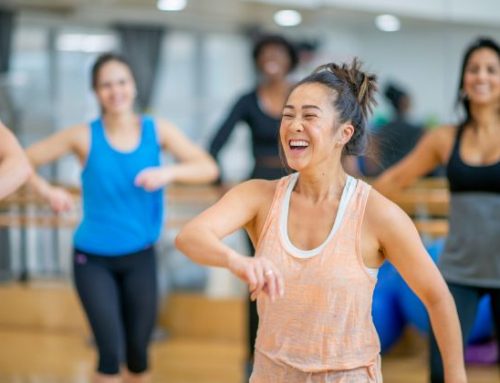
Baduanjin, which comes from the same family as tai chi, is a slow and deliberate eight-movement sequence, that’s combined with deep, intentional breathing and meditative focus. In China, it’s traditionally practised outdoors at sunrise, in parks, with others. Groups moving together in the morning light before the day begins enjoying sunlight, fresh air, breathwork and community.
Researchers recently put it to the test in the first large-scale randomised trial of its kind, finding that baduanjin reduced 24-hour systolic blood pressure by 3 points and clinic measured readings by 5 points. This is comparable to a brisk walking programme and comparable to what medications can achieve. Improvements showed within three months and held steady the entire year.
Whilst this study hailed the exercise as the hero, the fact this exercise is largely practiced outside during sunrise can’t be discounted. So, whether it’s the movement, the morning light, the breathwork, or all three working together, something about this ancient practice is doing something that modern medicine doesn’t consider, measure, or prescribe – but should.
The takeaway? Getting outside during sunrise is priority number one. If you can combine this with some gentle exercise, like walking, stretching or tai chi style baduanjin, all the better.

The Fermented Food That Helps Flush Microplastics From Your Body
Researchers estimate the average person now consumes roughly a credit card’s worth of plastic every week. It’s in our food, our water, the clothes we wear. And until very recently, we had no idea how to get it out.
A study from South Korea’s World Institute of Kimchi (and yes, there is such a thing) has found that a bacterium naturally present in kimchi can latch onto nanoplastics inside the gut and help carry them out of the body before they can spread further.
Nanoplastics are the most concerning of the plastic pollution family, smaller than one micrometre, small enough to cross cell membranes and even the blood-brain barrier. This specific lactic acid bacterium is tough enough to keep binding nanoplastics even inside the gut environment — and in the study, translated to more than double the amount of plastic being excreted compared to those that received nothing.
The takeaway? A healthy gut microbiome helps us in more ways than we could ever know and measure. Looking after your circadian health and enjoying a small daily serve of kimchi, sauerkraut, or kefir will go a long way in protecting your health. Ancient life and food wisdoms, solving very modern problems.

A 30-Minute Sauna Does This to Your Immune System
Thirty minutes in a hot room is doing a lot more than making you sweat. A new Finnish study has confirmed that a sauna session measurably mobilises your body’s frontline defence against illness, and the results were consistent whether participants were regular sauna users or complete beginners.
Researchers tracked adults through a 30-minute session at 73°C. All circulating white blood cells increased, including neutrophils and lymphocytes, the immune system’s key infection-fighters. The immune response happened regardless of how often participants used saunas, meaning every session has benefits.
For those regular sauna sweaters, the news was even better. People who sauna four or more times per week showed a 37% lower risk of respiratory infections like pneumonia.
Researchers believe the mechanism is “enhanced immune surveillance” – which means in lay terms, heat stress sends white blood cells into circulation to patrol your body, without triggering the damaging inflammation associated with actual infection. Your immune system gets a workout without a fight.
The takeaway? Take the opportunity to hop into a sauna whenever you can. Don’t have access to one? I’ve got you. A hot bath for 20–30 minutes has been shown to activate similar pathways so you can get the same effect (or very similar) with no membership required. See below.

🤓 Smarty Pants
Heat Shock Proteins
You just read about what a 30-minute sauna does to your immune system. But there’s another player in that story that deserves its own spotlight — one your body has been producing since the beginning of time.
Heat shock proteins, or HSPs for short, are your body’s built-in cellular repair crew. When your body experiences stress, whether from heat, intense exercise, or infection, it triggers the production of these remarkable proteins. Think of them as molecular bodyguards that rush in to protect your cells, prevent damage, and keep everything functioning as it should.
Here’s the beautiful part. HSPs don’t just respond to heat, they help other proteins fold correctly, which matters more than it sounds. Misfolded proteins are implicated in some of the most feared diseases of our time, including Alzheimer’s and Parkinson’s. Research shows that HSP70 – one of the most studied in the family, actively prevents the misfolded protein build-up linked to Alzheimer’s and Parkinson’s. Your sauna session isn’t just relaxing – it’s potentially neuroprotective.
The problem? Modern life has engineered out almost every natural trigger for HSP activation. Our ancestors activated them daily through physical work, fire, sun, hot springs. We live in temperature-controlled comfort and wonder why our cells aren’t as resilient as they once were.
The good news is your body never forgot how. A 30-minute sauna or a hot bath is enough to wake them up. Exercise does it too. Gentle, deliberate stress, the kind your body was designed to handle is one of the most powerful longevity tools we have.

☀️ Sandy’s Sunshine
Why Probiotics Alone Won’t Save Your Gut And What Might
We’re constantly astounded by the wonders of a healthy gut and microbiome, and yet there is still so much we don’t know. And whilst we’re sold bottles of probiotics and drinks, no-one speaks of of the natural practices, that create a healthy gut environment. This week we’re diving into gut health and how circadian biology and our gut are connected.

Your new BFF: Bifidobacteria
Did you know, bifidobacteria is the first thing to disappear when disease strikes? Microbiome researcher Dr Sabine Hazan has sequenced over 15,000 stool samples globally, so she knows her s#@t. And what she’s found is confronting: less than 5% of people tested had detectable levels of bifidobacteria. The rest? Essentially zero.
We are living through a microbial extinction event and most of us have absolutely no idea it’s happening inside us right now.
Your Gut Isn’t Just About Digestion
Your microbiome is a communication network, electrically, chemically, and neurologically connected to your brain, your immune system, your mood, and your hormones.
Every chronic disease begins with a gut that’s out of balance. Alzheimer’s. Depression. Autoimmunity. Your energy, your skin, your mental clarity, all of it traces back, in part, to what’s living (or not living) in your gut.
And here’s what conventional medicine keeps missing: you cannot supplement your way out of microbiome collapse. Taking a probiotic into a damaged gut is like planting flowers in a swamp. The terrain has to be fixed first.
The Circadian Connection Your Gut Has Been Waiting For
This is where it gets really interesting and where circadian health and gut health collide in a way that changes everything.
Circadian health is the practice of aligning your daily habits, your light exposure, sleep, eating, movement, with your body’s natural 24-hour biological clock. Every cell in your body runs on this rhythm. Including, it turns out, the 38 trillion microbes living in your gut.
Your gut microbiome rises and rests with you. It responds to light and darkness, to meal timing, to sleep and stress, just as your hormones do.
And bifidobacteria, that critical, disappearing gut bacteria, loves sunlight. Morning light on the abdomen has been shown to stimulate bifidobacteria growth. Not a supplement or a powder. Sunlight on your belly. The gut-brain axis isn’t just a metaphor. It’s a living, light-responsive biological highway that your ancestors used every single day without thinking twice about it.
Vitamin D increases bifidobacteria as does Vitamin C. Diverse, whole, seasonal food feeds it. Genuine rest restores it.
The cheapest, most overlooked gut health ritual available to you costs absolutely nothing. It’s right outside your door, every morning, completely free and happily accepts you in your PJs and messy bun.
The Circadian Gut Reset
Ready to get your gut health shining bright like the sun? Here are some things to get you started:
Morning light, especially on your belly. Ten minutes of morning sun is one of the most powerful gut-supportive signals you can send your body. Your microbiome responds to it directly.
Get your bare feet on the earth. Grounding, walking barefoot on grass, soil, or sand, shifts your nervous system from fight-or-flight into rest-and-digest, reduces inflammation in the gut lining, and exposes your microbiome to the natural microbial diversity it was designed to encounter every single day.
Feed the bugs you want to keep. Diverse, fibre-rich vegetables. Fermented foods like kefir, kimchi, and sauerkraut. A rainbow of seasonal, unprocessed food. Fewer ingredients your great-grandmother wouldn’t recognise.
Eat with the clock, not against it. Your gut microbiome doesn’t just respond to what you eat, it responds to when you eat. Over half of your microbial community fluctuates rhythmically across a 24-hour cycle, and your digestive enzymes and nutrient transporters are primed to work hardest earlier in the day. Eating your biggest meals in the morning and middle of the day, finishing by early evening, and giving your gut a genuine overnight rest isn’t a diet trend, it’s working with 24 hours of biological design. A gentle walk after your evening meal helps too. Your ancestors didn’t eat in front of Netflix at 9pm, and your microbiome hasn’t forgotten that.
Protect your sleep like it’s a non-negotiable. Your gut microbiome runs on a circadian clock. Disrupted sleep disrupts everything downstream. Blue light blocking glasses after sunset are genuinely one of the most underrated gut health tools going.
Take stress seriously as a gut issue. Chronic stress kills beneficial microbes. De-stressing isn’t self-indulgence. For your gut, it’s medicine.
Pause before reaching for antibiotics. One course can take six months of gut recovery. Ask the question first. Explore alternatives where appropriate.
Gut Health Isn’t a Product
Gut health isn’t a product you can buy or something you can fix, to compensate for all the things you’re doing wrong. It’s a rhythm you return to.
Light. Sleep. Real food. Less of what disrupts your biology, more of what your body was designed to thrive on.
This is the work, and it’s simpler and cheaper than the supplement industry would like you to believe.
🔢 Number Crunch
1.13 billion: the number of people worldwide who have high blood pressure. A chronic condition, which a free, 10-minute practice, done in a park, outside can help. No prescription, no drugs, no costs and side effects.
The information in this newsletter is for educational purposes only and not intended as medical advice. Always consult with a healthcare professional for personal health decisions. This post may contain affiliate links, and I may earn a small commission if you make a purchase, at no extra cost to you.





Leave a Reply