

Welcome to The Rise – your weekly dose of circadian sunshine, decentralised health wisdom, and actionable tips to help you live healthier, stronger, and more empowered.
Get healthier and stronger this week by learning:
- Outdoor Activity Beats Indoor for Brain Power
- Nature’s Antidepressant Is Literally Under Your Fingernails
- Your Body Hears Everything Your Mind Says
- Psychoneuroimmunology (PNI)
- The Light Revolution: Top Three 2026 Light Studies That Change Everything
- Short & Sweet
Have suggestions — or something you’d love to see covered here? Help me better serve this vibrant community of health rebels and send me your feedback here.
Much love and sunshine, ☀️
Sandy xx

Issue #107 • 15 February, 2026
🌅 Rise Report
Outdoor Activity Beats Indoor for Brain Power
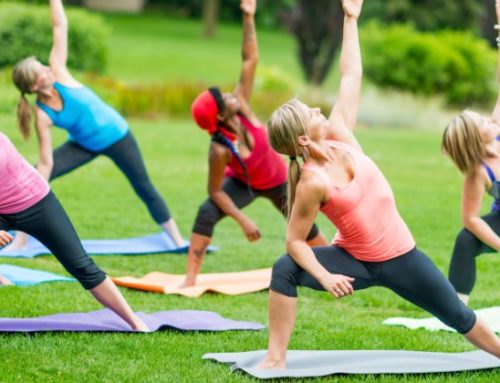
Think working out in a gym is better for you? Better hop off that stair master think again. Researchers at Nottingham Trent University compared identical 30-minute basketball sessions done indoors versus outdoors with a bunch of teenagers.
The results were remarkable. After outdoor activity, children showed dramatically better cognitive performance, with improvements in memory, attention, and executive function.
“The overarching finding of this investigation is that physical activity performed outdoors significantly improves cognitive function more than when performed indoors, suggesting a synergistic effect between physical activity and the outdoor environment.”
Here’s what’s fascinating: even though children covered less ground outdoors, their cognitive gains were superior. The outdoor environment appears to create a synergistic effect with physical activity that you simply can’t replicate indoors. Natural settings seem to offer the brain a gentle, restorative experience whilst simultaneously engaging it—the best of both worlds.
The takeaway? Whilst this study did focus on teenagers, I feel we adults can learn a thing or two here too! When it comes to exercise and brain power, location matters. That morning run outside isn’t just good for your body—it’s giving your brain an upgrade that the treadmill simply can’t match. Plus, your 37 trillion cells get bathed in natural light, fresh air, and real temperature variation instead of LED lights, artificial climate control, and stale recycled air. That’s a win especially first thing in the morning.

Nature’s Antidepressant Is Literally Under Your Fingernails
What if I told you the dirt under your fingernails after gardening contains bacteria that work better than Prozac—and without the side effects?
Scientists have discovered that Mycobacterium vaccae and Streptomyces rimosus, soil bacteria you encounter every time you garden, activate serotonin-producing neurons in your brain the same way antidepressant drugs do. Just 5 minutes of contact with living soil increased serotonin levels, lowered inflammation markers, and boosted alpha brain waves associated with relaxation.
But here’s where it gets really interesting. A landmark meta-analysis published in PLOS Medicine found that 75% of the improvement seen in people taking antidepressants also occurred in those taking placebo pills. In other words, three out of four people who felt better on antidepressants would have felt just as much better taking a sugar pill. The actual drug effect for most people with mild to moderate depression? Minimal at best.
Meanwhile, getting your bare hands into living soil triggers genuine biochemical changes—increased serotonin, reduced stress hormones, enhanced cognitive function—all without pharmaceutical side effects.
The decentralised wisdom? Your garden might be the pharmacy you’ve been looking for. Five minutes of digging in the dirt, whilst getting some sunshine and fresh air, could do more for your mood than a prescription ever will.

Your Body Hears Everything Your Mind Says
What if talking to your body could change your health faster than supplements? Sounds like wishful thinking, right?
Not according to researchers at UCLA who discovered something remarkable: when people practised self-affirmation—literally speaking kindness to themselves—their bodies responded with measurable physiological changes.
In a landmark study published in Psychological Science, participants who affirmed their personal values before a stressful task, for example saying “I am capable”, showed significantly lower cortisol responses compared to the control group. But here’s the fascinating part: the scientists weren’t testing magic—they were testing feedback loops.
When words reduce fear, cortisol falls, blood flow improves, and immune cells repair faster. Your body listens to tone before it listens to data.
Researchers call it “affective signalling”—your nervous system treats inner speech like sound waves from someone else. Which means every insult, even silent ones, lands chemically real. Self-kindness isn’t just psychology. It’s neurobiology.
A 2020 Oxford study took this further, using brain imaging to show exactly what happens when you speak kindly to yourself. Self-affirmation activated reward centres in the brain whilst reducing activity in regions linked to inflammatory stress responses. Translation? Your body literally stops treating itself like the enemy.
One researcher studying chronic pain patients witnessed something profound. When a woman shifted from apologising to her body to thanking it, her muscle tension dropped by half within days. As her doctor observed: “She stopped fighting her body—and it stopped fighting back.”
The takeaway? Your body hears everything your mind says. The most powerful medicine might not be found in a bottle, it might be spoken by you.
❤️ What’s Hot:
Liquid Gold For Every Season
Whether it’s hot summer weather or winter’s chilly wind trying to take its toll on my skin, there’s a little bottle of gold I use all year round – Biologi’s organic, cold-pressed rosehip oil.
What makes it special? It’s 100% pure Rosa Canina seed oil. Nothing else. No fillers, no additives, completely unrefined. Just pure plant power delivering vitamin A, vitamin E, and essential fatty acids straight to your skin cells.
A few drops leaves my skin soft and glowing. But why stop at your face? I’ve read people using Biologi’s Rosehip Oil on their scalp, nails, body and even to remove darkness under their eyes. Simple, effective, and utterly beautiful. You can explore Biologi’s Rosehip Oil and their full range here:

🤓 Smarty Pants
Psychoneuroimmunology (PNI)
Psycho-neuro-immunology might sound like a mouthful, but it’s simply the science of how your thoughts, nervous system, and immune system talk to each other. Think of it as the ultimate feedback loop between your mind and body.
Here’s how it works: your brain doesn’t just think thoughts—it translates them into chemical messages. When you think “I’m safe” or “I’m healing,” your nervous system sends calming signals that reduce cortisol, improve blood flow, and help immune cells do their job. When you think “I’m failing” or “I’m broken,” your body responds with stress hormones and inflammation as if you’re under attack.
What makes PNI so revolutionary is the proof that this isn’t just in your head—it’s measurable in your bloodstream. Studies using brain imaging and blood tests show that positive self-talk literally changes your cortisol levels, immune cell activity, and inflammatory markers within minutes to days.
Your thoughts aren’t separate from your health. They’re creating it, one internal conversation at a time. Or as we used to say in my yoga days, “energy follows thought”.
Let’s give this a try now. Place your hand on your heart, take a breath, and say:
“Thank you, body, for all you do. You’re strong, you’re healthy, you have everything you need to heal.”
🔥 Deep Dive: TL;DL
The Light Revolution: Top Three 2026 Light Studies That Change Everything
Meet Dr. Max Gulhane, an Aussie doctor who’s been challenging conventional sun exposure guidelines for years, and Jonathan Jerki, a biomedical science student from the US who’s been educating thousands on social media about the critical role of light wavelengths in human health. Together, they’ve just dissected three ground-breaking papers published in 2026 (and it’s only February) that are rewriting what we know about sun exposure, longevity, and metabolic health. Let’s dive in….

Study #1: Why Sun Avoiders Die Younger
Richard Weller (yes, the Edinburgh dermatologist we’ve mentioned before) just dropped what might be the most important sun exposure study ever published. Using the massive UK Biobank dataset with over 400,000 participants, his team created something called the “Sun-BEEM score” to categorise people’s UV exposure as low, medium, or high.
Here’s what he found: those with the highest sun exposure had a 16% reduction in all-cause mortality and a whopping 23% reduction in cardiovascular death compared to sun avoiders. And here’s the kicker—they saw a perfect dose-dependent curve. The more sun, the better outcomes across the board.
But what about skin cancer, I hear you say? Yes, more UV exposure meant slightly more melanoma cases but it’s all about risk vs reward, my friend.
The researchers ran a fascinating thought experiment within this study. Based on their data, they found if everyone fell into the low UV exposure category, you’d prevent 39 melanoma deaths, but you’d cause 3,000 excess deaths from other causes. Flip it around, if you put everyone in the high UV exposure category, you’d save 4,700 lives but lose 23 to melanoma.
The ratio? For every one skin cancer death you prevent by avoiding the sun, you cause 75 deaths from cardiovascular disease and other cancers.
As the researchers bluntly stated: “Overall, these findings challenge the simplistic view that sunlight is primarily a skin carcinogen whose benefits can be replaced by vitamin D tablets and instead, support a more balanced perspective in which UV exposure contributes meaningfully, and not fully substitutable, to the prevention of cardiovascular disease and other major cancers.”
Translation? We’ve been so obsessed with preventing skin cancer that we’ve ignored the elephant in the room—heart disease and internal cancers that are actually killing far more people.
Study #2: Why your LED-lit office is destroying your eyesight
We already covered this study by Glen Jeffery a couple of weeks ago, but here it is again for those that may have missed it. It’s a goodie and worth revisiting.
Glen Jeffery’s team took infrared cameras into a typical UK office building – no windows, glass that reflects infrared light, only LED lighting. When they photographed the environment with infrared cameras, it was essentially a black void. Zero near-infrared light.
Then they did something brilliantly simple: they placed 60-watt incandescent bulbs on workers’ desks for two weeks. That’s it. No other changes.
The results? A 28% improvement in visual function (color contrast sensitivity) that lasted at least six weeks after removing the bulbs. The participants’ eyes were literally getting healthier just from adding back the wavelengths of light their mitochondria desperately needed.
Here’s why this matters: Your retina is one of the most mitochondrial-dense tissues in your body. When you flood it with blue-heavy LED light and starve it of red and infrared wavelengths, your mitochondria can’t produce adequate ATP. Your vision suffers. Your brain suffers. Your entire body suffers.
As Max powerfully stated:
“By putting LED lighting in all of our indoor environments, we are sacrificing our mitochondrial health. We are sacrificing our mitochondrial health in our eye, in our brain, in our heart, throughout our body on the altar of green energy.”
Government regulations prioritised energy efficiency over human health and biology—and now we’re all paying the price. If you’re goal is healthspan and longevity – daily sun exposure is your friend.
Study #3: How the light in your workspace controls your blood sugar—whether you’re eating kale or cookies
In the final study, researchers took Type 2 diabetics and placed them in two different work environments: one with natural daylight streaming through windows, another with only LED lighting. Same food. Same activity. Only difference? The light.
Those working by windows had more time in normal glucose range and lower 24-hour glucose variability. Why? The dynamic shifting of natural light throughout the day—from orange at sunrise, to blue at midday, back to orange at sunset—sets your circadian rhythm. This rhythm literally controls gene transcription in your muscles, liver, pancreas, and fat tissue. Under static LED lighting? Your body has no idea what time it is. Your metabolic machinery goes haywire.
The Bottom Line
These three studies paint a bleak picture: modern indoor environments are profoundly alien to human biology. We evolved under full-spectrum sunlight from dawn to dusk. Now we’re locked in LED-lit boxes, made to fear UV, starved of infrared and the dynamic light patterns our bodies expect. We all know about the importance of eating a healthy diet and getting adequate exercise and movement in our day, but now we need to discuss light. As Dr Max perfectly summarised: “You can’t out-run or out-eat a junk light diet.”
Your Quick 5 Step Action Plan:
- Get outside daily and regularly — your life literally depends on it
- Add an incandescent bulb to your work desk (seriously, do this today)
- Work near windows when possible.
- Even better, open nearby windows and doors to let the light in
- Remember our goal is to develop a healthy respect and safe relationship with the sun
The science is crystal clear. The question is: will the medical establishment and people wake up before it’s too late? You can check out this podcast here.
🍯 Short & Sweet
> Brain training game may help protect against dementia for up to 20 years
> Good news! Just half an hour of less sitting each day can boost energy and metabolism
> Why is it bad to eat sugar before bed?
> Want a healthier heart? Exercise at this hour, says new research
🔢 Number Crunch
1 billion — The number of bacteria in a single teaspoon of healthy garden soil. You’re literally holding trillions of potential mood-boosters in your hands when you garden.
“The happiness of your life depends upon the quality of your thoughts.” – Marcus Aurelius
The information in this newsletter is for educational purposes only and not intended as medical advice. Always consult with a healthcare professional for personal health decisions. This post may contain affiliate links, and I may earn a small commission if you make a purchase, at no extra cost to you.




Leave a Reply