

Welcome to The Rise – your weekly dose of circadian sunshine, decentralised health wisdom, and actionable tips to help you live healthier, stronger, and more empowered.
October is Breast Cancer Awareness Month—a time dedicated to education, early detection, and supporting the millions of women affected by this disease. You’d be hard-pressed to find someone (me included) who hasn’t been touched by breast cancer, whether it be a family member, a friend, or colleague.
In honour of all women, today we are diving into the latest research on what could be driving the alarming increase in breast cancer rates and, more importantly, what we can do to reduce our risk. Because knowledge isn’t just power, it’s protection.
Have suggestions? Or something you’d like to see here? Help me better serve this vibrant community of health rebels and send me your feedback and message here.
Much love and sunshine, ☀️
Sandy xx

Issue #91 • 26 October, 2025
🌅 Rise Report
October Sun: Your Natural Breast Cancer Shield
As October reminds us to think pink, here’s something your doctor probably won’t mention during Breast Cancer Awareness Month: sunshine might be one of your most powerful prevention tools.
A ground-breaking meta-analysis examined 13 studies across North America, Europe, and Iran and discovered something remarkable. Women who spent at least one hour per day in the sun during summer months had a 16% lower risk of developing breast cancer compared to those who spent less time outdoors.
In a 2025 study, each extra hour per day of lifetime sun exposure was tied to ~9–16% lower odds, and sun exposure in adolescence showed ~11–16% lower odds per hour—pointing to extra benefits when you get outside early in life
Here’s what really caught my attention: sun exposure during your teenage years and early adulthood offered stronger protection than sun exposure after age 45. And in a separate study from Puerto Rico, women with the highest sun exposure had 53% lower breast cancer risk.
While scientists believe vitamin D production plays a key role, the message is clear: your body was designed to live with the sun, not hide from it.
The takeaway? That daily walk in the sunshine isn’t just good for your mood—it might be quietly protecting you in ways we’re only beginning to understand.

Women with hereditary breast cancer predispositions should avoid using their devices at night
While daytime sun exposure may protect against breast cancer, night-time light exposure—especially the blue light from your smartphone, tablets and laptop—might be doing the exact opposite.
In this study, women with hereditary breast cancer predispositions (like BRCA1 or BRCA2 mutations, or a family history) are specifically warned to avoid using smartphones, tablets, and laptops at night. The reason? Blue light from digital screens suppresses melatonin and disrupts your circadian rhythm. For women already carrying genetic risk factors, this disruption can amplify breast cancer susceptibility.
Here’s what’s happening: your ancestors never encountered bright blue light after sunset. When you scroll Instagram at 11pm, your body thinks it’s midday and shuts down melatonin production—exactly when you need it most for cellular repair and cancer prevention.
Whilst devices may be “connecting” us more than ever, simultaneously, they’re disconnecting us from the natural light-dark cycles that have kept our bodies in check and healthier rhythms.

It’s Not Just Night Shift Workers Anymore
Think circadian disruption and breast cancer only matters if you’re working the graveyard shift? Think again.
A comprehensive review found that sleep and circadian disruption may increase breast cancer risk for all women, regardless of whether you work night shifts. The reality is that most women in industrialised societies are regularly exposed to significant light at night and circadian disruption, particularly with our phones, tablets, and late-night screen habits.
The research is compelling. Disruptions in sleep and circadian rhythms are linked to increased breast cancer risk, affecting your immune system, hormones, metabolism, and cellular processes—all pathways involved in breast cancer development.
Your body was designed to sleep in darkness and wake with light. When we mess with that ancient rhythm—scrolling before bed, keeping lights on late, sleeping in bright rooms—we’re doing more harm than just losing sleep.
In partnership with SaweetWay
❤️ What’s Hot
100% Yummy. Zero % Sugar.

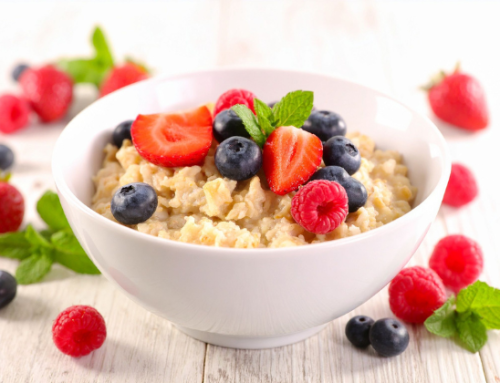
My 15 year old son loves to bake. He’s also got a bit of a sweet tooth. So when I discovered SaweetWay’s allulose sweetener, I had to give it to my dear sunshine to put to the test.
The result? Lucas’ shortbread was absolutely yummy as always. Sweet and buttery, but without the refined sugar which means without the blood glucose spikes too.
Allulose is clever in that it tastes and bakes exactly like sugar, but your body doesn’t break it down the same way. No insulin spike, virtually zero carbs and 87% less calories.
Pro tip: add a teaspoon of cinnamon and vanilla for a Christmas twist. These biscuits were disappearing so fast I had to quickly get my photo in! Ready to get baking! You can find the shortbread recipe here.
🤓 Smarty Pants
Insulin Resistance
We hear the term “insulin resistance” being thrown around and know it has something to do with metabolic health. But what does this actually mean and what’s the impact?
Think of insulin as a key that unlocks your cells so glucose (sugar) can get inside for energy. When you’re insulin resistant, your cells stop responding to insulin’s knock on the door. So your pancreas makes more and more insulin, trying to force that door open. Eventually, you end up with both high blood sugar AND high insulin circulating in your blood—a dangerous combination.
But here’s where it gets serious: insulin is a growth hormone that can fuel cancer cell proliferation. Studies show women with insulin resistance have 30-50% higher breast cancer risk, and those who develop breast cancer face a 78% higher risk of death.
Insulin resistance is also a major driver of Type 2 diabetes, heart disease, and stroke, making it one of the most dangerous metabolic conditions of our time.
The culprits? Processed carbs, sugar, lack of sleep, chronic stress, and, you guessed it, disrupted circadian rhythms. Your metabolism wasn’t designed for our modern 24/7 lifestyle or being fed a high sugar and highly refined, processed diet.
🔥 Deep Dive: TL;DL
Podcast: Shocking Toxin You’re Exposed To Causing Cancer, Obesity, Diabetes & Fatigue | Dr. Martin Moore-Ede
Meet Dr. Martin Moore-Ede. For over 40 years, Dr. Martin Moore-Ede has been at the forefront of circadian health research. As a former Harvard Medical School professor, he led the groundbreaking team in the 1980s that discovered the suprachiasmatic nucleus – our brain’s master clock that controls when we sleep, wake, and when every cell in our body knows what time it is. His latest work connecting artificial light exposure to the breast cancer epidemic is nothing short of jaw-dropping. In today’s TL;DL podcast, we uncover the inconvenient truth between modern lighting and health.

The Shocking Statistics
Dr. Moore-Ede doesn’t mince his words. In his conversation with Dhru Purohit he makes it pretty clear. Women who have never seen electric light, such as women who are blind or live in remote areas, rarely get breast cancer. In contrast, women who are regularly exposed to bright electric light after sunset have breast cancer diagnosis rates that are five or more times higher than women with no exposure to electric light.
“The rate of breast cancer in women who don’t see electric light at night is about 20 cases per 100,000 women per year. In women in Western societies exposed to light at night, it’s over 100 to 120 cases per 100,000 women.”
But Dr. Moore-Ede gets more specific. The real culprit he says, isn’t just any light—it’s blue-rich light, the kind that dominates our modern LED bulbs, fluorescent lights, phones, computers, and TVs.
Why Blue Light at Night is So Dangerous
When blue light hits receptors in our eyes after dark, it tricks our bodies into thinking it’s still daytime. This switches off the restorative and healing processes that should be running at full steam to protect us from cancer and other diseases during the night time hours.
The blue content in modern electric lighting, particularly LEDs that became widespread by 2014, keeps us locked in perpetual daytime mode, even at midnight.
The UK Biobank Study: Real People, Real Consequences
One of the most comprehensive studies tracked nearly 88,000 people (average age 60) wearing light meters continuously for a week. Researchers measured their light exposure during the day and night, then followed them over time.
The results? Those with the most light exposure at night had a dramatic decrease in life expectancy, dying 40% faster from cardiovascular disease and 30% faster from all causes compared to those who slept in complete darkness.
As Dr. Moore-Ede puts it: “The effects are as large as whether you’re a smoker or a non-smoker in terms of scale.”
What Changed?
Here’s the timeline. Breast cancer incidence rates remained relatively low in the USA from 1914 to 1970 when electric lights were mostly low-blue incandescent bulbs. But then breast cancer diagnosis rates shot up more than four-fold over the next 40 years as blue-rich fluorescent lights were widely introduced, followed by LEDs.
The Bottom Line
Dr. Moore-Ede’s research suggests (which he openly discusses regularly) is that the majority of breast cancer cases in the Westernised world today are related to light exposure—specifically, seeing the wrong light at the wrong time.
The good news? This is something we have real control over. Unlike many risk factors, we can actually change our light environment.
Dr. Moore-Ede’s message is clear: “Get as much bright light during the daytime, particularly in the mornings, and avoid like the plague light with blue in it during the evening hours and sleep in the pitch dark.”
Your body will thank you. Your cells will thank you. And you’ll be taking a powerful step toward protecting yourself from one of the most preventable epidemics of our time.
Want to learn more? Check out Dr. Moore-Ede’s book The Light Doctor: Using Light to Boost Health, Improve Sleep, and Live Longer and his work at circadianlight.org. I highly recommend his book.
PS – Earlier this year, I met with the CEO of Breast Cancer Network Australia (BCNA), Kirstin Pilatti and their Director of Policy, Vicki Turston to share the well established science showing the link between healthy and unhealthy light and breast cancer. Unfortunately, it’s crickets from their end however, here is the document I shared with them which includes a bunch of additional studies and resources in case you find this helpful.
Even sadder was the confirmation that their resources are being allocated to early detection which means diagnostics, and treatment (which of course we need, but are both also monetisable) – so prevention is not an area of focus. Clearly the BCNA are not familiar with the quote that “An ounce of prevention is worth a pound of cure.”

☀️ Sandy’s Sunshine
Color Your iPhone Red: Protect Your Circadian Rhythm Tonight
Here’s how:
Step 1: Go to Settings > Accessibility > Display and Text Size > Colour Filters
Step 2: Turn on “Colour Filters” and select “Colour Tint.” Then scroll down and slide both Intensity and Hue all the way to maximum. Your screen will now have a red tint that blocks the sleep-disrupting blue light.
Step 3: Create a shortcut by going to Settings > Accessibility > Accessibility Shortcut > Colour Filters. Now you can switch between your regular screen and red mode by triple-clicking the side button. Voila!!
You can now easily use your regular screen during the day, then switch to red mode after sunset. And whilst this isn’t a perfect solution (which would be to not use your phone at all), it is a whole lot better than blasting blue light into your eyes at 10pm at night.
PS – The image below shows the color intensity set to the maximum level so you can tone this down if you prefer.

Image source: https://ios.gadgethacks.com/how-to/keep-your-night-vision-sharp-with-iphones-hidden-red-screen-0173903/
🔢 Number Crunch
# 1 — Breast cancer is the most commonly diagnosed cancer in women in Australia (and the US). The risk of being diagnosed with breast cancer is currently 1 in 8 women, and sadly increasing every year.
“Humans are the only species smart enough to make artificial light but stupid enough to live under it.”
― Dr Jack Kruse

The information in this newsletter is for educational purposes only and not intended as medical advice. Always consult with a healthcare professional for personal health decisions. This post may contain affiliate links for Daylight computer, and I may earn a small commission if you make a purchase, at no extra cost to you.





Leave a Reply