

Welcome to The Rise – your weekly dose of circadian sunshine, decentralised health wisdom, and actionable tips to help you live healthier, stronger, and more empowered.
This week, butter gets vindicated, your internal clock battles government policy, sleep consistency trumps duration, and we discover why Italian nonnas might know more about longevity than ultra-marathoners. Plus, the essential fatty acid you’ve never heard of.
Have suggestions? Or something you’d like to see here? Help me better serve this vibrant community of health rebels and send me your feedback and message here.
Much love and sunshine, ☀️
Sandy xx

Issue #90 • 19 October, 2025
🌅 Rise Report
Butter Vindicated: Saturated Fat Gets Its Redemption Arc
Grab the grass-fed, organic butter, my friends – science just gave you permission to stop feeling guilty (not that you needed it right?). A massive systematic review published in April 2025 analysed 9 randomised controlled trials involving 13,532 participants and found that reducing saturated fat intake did NOT significantly reduce overall mortality, cardiovascular mortality, heart attacks, or major cardiovascular events. To quote the study itself…
“Conclusions: The findings indicate that a reduction in saturated fats cannot be recommended at present to prevent cardiovascular diseases and mortality.”
Translation? Those 50+ years of dietary guidelines demonising saturated fats were based on shaky science, which we’ll save for another day. The study concluded that simply cutting saturated fat without considering what replaces it provides zero measurable health benefit.
Your grandmother’s buttery cooking, coconut oil, and quality meats within a context of real, whole foods aren’t the villains they’ve been painted as. It’s the cover up stories and manipulated science that are.

Your Internal Clock Knows Better Than Government Policy
Whilst most of us have just been through the “joy” of magically gaining and losing time, here’s a stat that’ll wake you up: maintaining permanent standard time could prevent 2.6 million cases of obesity and 300,000 strokes annually in the US alone. Stanford researchers just dropped this bombshell in September 2025, revealing what I, and fellow circadian health advocates have been saying for years—switching clocks twice a year is wreaking havoc on our biology.
The biannual clock changes create society-wide jet lag that disrupts our circadian rhythms. Permanent standard time provides crucial morning light exposure that stabilises our internal clock, whilst permanent daylight saving time would achieve about two-thirds of the same benefit. Either way, the twice-yearly switching is the worst and unhealthiest option for us, and has got to go.
The takeaway? We can’t wait for policy makers to catch up to what we already know. You can protect your circadian health by prioritising morning light exposure and by having rock-solid consistent sleep schedules. If you’re looking for some some Daylight Saving health tips you can find them here.
Sleep Scientists Reveal: When You Sleep Matters More Than How Long
The first piece of sleep advice we’ve all be told a million times is this: “make sure you get your 8 hours of sleep each night”. Well, here’s a sleepy plot twist for you: regularity in sleep timing matters more for your health than how many hours you get.
Research published earlier this year found that greater variability in sleep patterns is associated with worse sleep quality, disrupted circadian rhythms, and poorer mental and physical health—often beyond what sleep duration alone contributes.
Even more compelling? In another study, sleep regularity was found to be a stronger predictor of all-cause mortality compared to sleep duration. In other words, going to bed and waking up at consistent times every day (yes, even on weekends and holidays) might actually predict how long you’ll live.
Your circadian system thrives on predictability. Those weekend lie-ins might feel luxurious at the time, but they’re confusing your body’s internal clock. Consistency is the real sleep hack everyone’s been missing.
❤️ What’s Hot
Healthier Christmas Lights – Ho Ho Ho!

Decking the halls doesn’t mean destroying your circadian rhythms. I’ve just purchased a set of these incandescent Christmas lights and couldn’t help but share the festive joy!
Unlike LED Christmas lights that blast you with sleep-disrupting blue light, these old-school incandescent beauties won’t trash your melatonin production. They’re the Christmas lights we used when we were little — before everything went LED and started messing with our biology.
We don’t have to take the joy out of Christmas. We just need to buy better. Your circadian rhythm will thank you, and honestly? That warm incandescent glow is way more magical anyway. Ho ho ho! 🎄✨
🤓 Smarty Pants
C15:0 A Nutritional Discovery 90 Years in the Making
Meet C15:0 (pentadecanoic acid)—the first essential fatty acid discovered in over 90 years. Whilst omega-3 and omega-6 have been hogging the spotlight, this odd-chain saturated fat has been quietly keeping your cells alive and thriving.
Discovered by Dr Stephanie Venn-Watson through research involving Navy dolphins, C15:0 works at the cellular level to reverse the key hallmarks of ageing. It activates AMPK (your cellular energy switch), activates PPAR receptors that control metabolism and immunity, removes damaged “zombie” cells, reduces inflammation, repairs mitochondria, and even fights cancer by reducing cancer cell growth.
Here’s the kicker: 1 in 3 people may have C15:0 deficiency—what researchers are calling “Cellular Fragility Syndrome,” the first nutritional deficiency discovered in 75 years. We need greater than 5 µg/ml (or 20 µM or 0.2% of total fatty acid) of C15:0 in our cell membranes to keep them strong and us healthy.
The problem? Modern dietary guidelines practically guarantee C15:0 deficiency by demonising the very foods that contain it. It’s time to flip that food pyramid on its head and enjoy some healthy fats. Pass the butter someone?
If you’d like to discover more about this amazing essential fatty acid, this Discover C15:0 website will have your head spinning.
🔥 Deep Dive: TL;DL
The Heartbeat Paradox – Why More Isn’t Always Better
Meet Dr. Raymond Townsend—a nephrologist and hypertension specialist from the University of Pennsylvania with over 40 years studying blood pressure. He’s seen thousands of patients, contributed to major clinical trials, and learned some uncomfortable truths about what actually protects your heart long-term. And one of his most controversial insights? Exercise might have an upper limit. In this week’s TL;DL we dive into a fresh podcast just released days ago titled “What Your Doctor Isn’t Telling You About Blood Pressure.”

Your Elastin Expiration Date
Has anyone ever told you, you have all the elastin you’ll ever have by age 15? That’s it. Elastin is what keeps your arteries flexible and springy—think of it as the difference between a garden hose and a steel pipe. Every single heartbeat causes microscopic stress fractures in this elastin, and your body can’t regenerate it after puberty.
Over decades, your body patches these tiny fractures with collagen—that tough, gristly stuff you find in cheap cuts of meat. As collagen replaces elastin, your arteries become stiffer. This is why your systolic blood pressure (the top number) continues climbing as you age, whilst your diastolic (bottom number) actually drops after 55.
The Heartbeat Budget Theory
Dr. Townsend shared something that raised eyebrows: “God gave us so many heartbeats in life. If you use them up on a treadmill, you probably are not doing a favour making it to your 80th year.”
Wait—isn’t exercise supposed to be good for us? Here’s the paradox: yes, but there’s a sweet spot.
Every heartbeat causes microscopic damage to your arterial walls. Someone with a resting heart rate of 100 beats per minute experiences significantly more cumulative stress than someone at 60 bpm. That’s 57,600 extra heartbeats daily—nearly 21 million more per year.
The solution? Exercise enough to lower your resting heart rate, but not so much that you’re constantly hammering your cardiovascular system. About 30-60 minutes of moderate aerobic activity daily provides the perfect balance—you temporarily elevate your heart rate during exercise, but reap the rewards of a lower resting rate during the other 23 hours of the day.
Marathon training, ultra-endurance events, excessive high-intensity workouts? Dr. Townsend suggests these might be doing more harm than good when it comes to long-term arterial health.
The Decentralised Wisdom? The Nonna Knows Best Test
Think about the Italian Nonnas living well into their 90s. They’re not smashing HIIT workouts or training for Ironman competitions. They’re walking to the market, carrying their delicious groceries home, tending their gardens, climbing stairs, kneading pasta dough all whilst picking up and chasing grandkids around. Keeping active? Absolutely. Pushing their limits? Not a chance. They’ve intuitively understood what the science is only now confirming—consistency and moderation trump intensity and extremes.
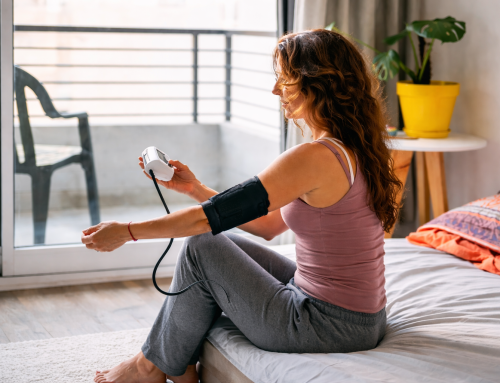
Your body keeps the score. Every heartbeat matters. Every year of uncontrolled inflammation or elevated blood pressure chips away at your arterial elastin. The answers aren’t in extreme biohacking or punishing workout regimes—they’re in the fundamentals: maintaining healthy body weight from youth, moving moderately and consistently, managing stress, protecting sleep, and actually measuring your blood pressure correctly at home.
Sometimes the most radical act of health sovereignty is choosing moderation over extremes. The Stoics were right all along.
☀️ Sandy’s Sunshine
Your C15:0 Food Hit List
Ready to give your cells the fatty acid love they’re craving? Here’s exactly where you can find C15:0 in your food:
🥛 Full-Fat Dairy (The Champions):
- Grass-fed butter—the richer, the better
- Whole milk (ditch that skim milk nonsense)
- Hard cheeses, especially from grass-fed animals (cheddar, gouda, parmesan)
- Full-fat yoghurt and kefir
🥩 Quality Meats:
- Grass-fed beef
- Lamb
- Bison
🐟 Fatty Fish:
- Salmon
- Sardines
- Mackerel
The Reality Check: For decades, we’ve been told to avoid these foods like the plague. Low-fat this, skim that, plant-based everything. Meanwhile, our bodies have been literally starving for the saturated fats that keep our cell membranes intact.
Modern dietary guidelines created this deficiency by removing the ancestral foods humans have thrived on for thousands of years. And it’s time to bring out grandma’s recipes back.
Your Action Plan: Stop apologising for eating real food. Swap low-fat products for their full-fat, grass-fed counterparts (organic preferable). Choose quality over quantity—grass-fed sources contain significantly more C15:0 than conventional alternatives. And please, for the love of your cellular health, stop with the skinny lattes.

🔢 Number Crunch
20-48% — the reduced risk of all-cause mortality for people with highly regular sleep patterns compared to irregular sleepers. 😴😴
“You can’t stay in your corner of the Forest waiting for others to come to you. You have to go to them sometimes.”
―
The information in this newsletter is for educational purposes only and not intended as medical advice. Always consult with a healthcare professional for personal health decisions. This post may contain affiliate links for Daylight computer, and I may earn a small commission if you make a purchase, at no extra cost to you.





Leave a Reply