

Welcome to The Rise – your weekly dose of circadian sunshine, decentralised health and actionable tips, tools and information to help you and your family be healthy, strong and free!
Scroll down to learn how to improve your vision and eye sight naturally, why you should give mouthwash and artificial sweeteners a big miss and what the new trend sleepmaxxing is all about.
Have suggestions? Or something you’d like to see here? Help me better serve this vibrant community of health rebels and send me your feedback and message here.
– Much love, Sandy xx

Issue #80 • 10 August, 2025
☀️ Latest News
Sleep Gets Trendy (Finally!) And It’s Called Sleepmaxxing
Have you heard the latest craze? It isn’t celery juice or some miracle eye cream—it’s sleep. And yes, there’s a term for it: sleepmaxxing.
Sleepmaxxing is all about using various activities, products, and “hacks” simultaneously to optimise your sleep. It’s apparently exploding on TikTok with over 100 million posts! Who knew sleep could be trendy? Well, obviously I did! 😉
While I’m all for sleep, like most wellness trends—suddenly there’s a host of things you MUST have. Specially designed cervical pillows, mouth taping, sleep tracking apps (hello, commercial world!)… the list goes on.
Don’t get me wrong—I’m all for a good night’s sleep and this trend shows just how many people are genuinely suffering from sleep issues and desperately want better rest. Just beware.
Before you start shopping, let me tell you the most important thing you can do for your sleep—and it’s FREE:
Control your light.
✅ Lots of morning light exposure
✅ Lots of natural light during the day
✅ Complete darkness at night
Your bedroom should be pitch black. I get it—this can be tricky with pesky streetlights sneaking through curtains and light creeping under doors. So yes, some accessories like quality eye masks (see below) and blackout blinds aren’t just following the latest trend—they’re an investment in your health and sleep account.
The difference? You’re being strategic about what actually works, not just buying everything because TikTok told you to.
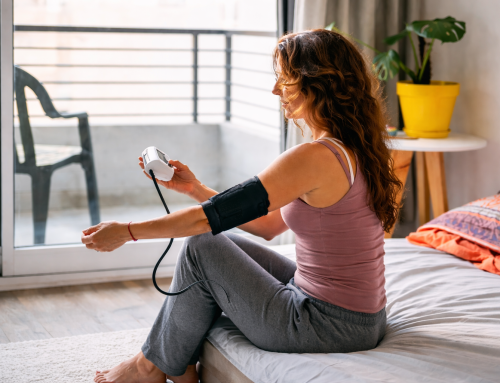
Mouthwash Users Have 85% Higher Hypertension Risk
Do you use over the counter mouthwash or what I liken to petrol? It’s never been for me (those colors are enough to put me off) and here’s something that may surprise you. A major study found that those who used mouthwash twice daily or more had an 85% higher risk of hypertension compared to less frequent users
The culprit? Antibacterial mouthwashes deplete the nitrate-reducing bacteria in your mouth that are essential for nitric oxide production—a molecule that helps regulate blood vessels and maintain healthy blood pressure.
Surprisingly, your oral microbiome plays a crucial role in the “enterosalivary pathway” which helps maintain cardiovascular health. But when you’re nuking these beneficial bacteria twice daily, you’re essentially disrupting your body’s natural blood pressure regulation system. And honestly, any product that comes with warnings “if swallowed, seek medical attention immediately” really makes you wonder about putting it in your mouth in the first place. Your oral biome deserves better—and so does your blood pressure.

Speaking of Microbiomes… Your Gut’s Getting Attacked Too
New research shows artificial sweeteners are disrupting gut bacteria worse than regular sugar—actually training your gut microbes to be more efficient at storing calories as fat. So not only aren’t we losing weight, we’re destroying the healthy gut bacteria that make up 70-80% of our immune system in the process.
This explains why most people who switch to artificial sweeteners fail to lose weight at the expected rate. The latest study found next-generation sweeteners cause gut damage similar to inflammatory bowel disease.
The irony? We’re avoiding sugar to be healthier, but we might be making ourselves sicker and our weight problem worse instead.

❤️ Product of the Week
The MZOO Sleep Eye Mask for Side Sleepers, Men & Women – 40,000 sold in the last month alone.
If pesky lights are sneaking into your bedroom at night, maybe this can help you… Meet the sleep mask that’s become an overnight sensation – literally. With over 40,000 sold in the past month 😱, and almost 95,000 reviews 😱😱, this must be one good sleep mask.
If you need help creating the perfect dark sanctuary your body craves, this blackout mask could be for you. Remember: darkness is your circadian rhythm’s best friend. When your eyes can’t detect light, your pineal gland produces precious melatonin.
P.S. Just remember to stay on the Amazon US site as it’s showing out of stock in Australia

🧠 Brain Boost
De-mystifying Melanopsin
Melanopsin is your body’s built-in light sensor—a special photoreceptor found deep in your eyes (not for vision, but for rhythm). It sits in a tiny group of cells called intrinsically photosensitive retinal ganglion cells (ipRGCs) and its main job? To tell your brain what time it is based on the light around you.
It’s how your body knows it’s morning when you get sunlight in your eyes…and how it knows it’s time to wind down when the lights go low.
But when you wear sunglasses at sunrise or stare at screens at midnight, you’re essentially giving your melanopsin fake news. No wonder you can’t sleep!
🔥 Deep Dive: TL:DL
Protocols to Improve Your Vision & Eyesight – Naturally
As someone gracefully approaching my mid-fifties, I feel incredibly grateful for my eyesight. I don’t wear glasses — not even for reading. And honestly? I’m doing everything in my power to keep it that way.
You see, I’ve noticed something a little unsettling. Many people I know who get reading glasses end up in an endless loop and “prescription merry-go-round.” Glasses lead to weaker eyes, worse eyesight, which lead to even stronger prescriptions, and the cycle continues.
While I’m not saying this happens to everyone, I can’t help but wonder if our current eye care system — like so many others — isn’t entirely set up for our health benefits. Call me cynical, but when did we start believing that declining vision with age was inevitable?
This week’s TL;DL (too long, didn’t listen) is based on a recent podcast by Dr. Andrew Huberman on improving your eyesight and vision and my own research. And whilst I don’t agree with everything Mr Huberman says and does, this podcast was insightful.
So, whether you’re glasses free, just wear reading glasses or wear glasses all the time – this is for you. We can all improve our eye health and slow the decline so let’s dive into eye facts that will blow your brain, the ancient secret hiding in your retinas, plus 6 protocols that could save your sight.
Your Eyes Are Brain Tissue (Wait, What?)
Here’s something your optometrist probably never told you: your eyes aren’t just sophisticated cameras attached to your head. They’re literally pieces of your brain that got squeezed out of your skull during foetal development and placed in eye sockets.
Think about that for a moment. You have two chunks of your central nervous system sitting on the front of your face, desperately trying to make sense of the world around you.
And those gorgeous eyelashes of yours? They’re not just for looking fabulous (though they do that too). They’re actually biological early warning systems, designed to trigger your blink reflex the moment anything — dust, debris, or yes, even fairy dust — threatens your precious vision.
And that blink? It’s the fastest reflex you own.
But here’s where it gets really interesting…
Your eyes aren’t just for eyesight. Beyond helping you see shapes and colors, your visual system is quietly orchestrating your mood, alertness, sleep patterns, hormones, appetite, and even your pain threshold.
No wonder your brain dedicates 40-50% of its prime real estate to vision. When you’re taking care of your eyes, you’re literally taking care of your brain.
Your Eyes Have Two Jobs
Your eyes have TWO jobs, and you might be surprised to learn which one is actually more important.
Job #1: Conscious vision — seeing shapes, colors, faces, and all the obvious stuff we think of as “sight.”
Job #2: Subconscious signaling — telling every single cell in your body what time it is.
Plot twist: Job #2 is actually the more ancient and critical function.
You see, as amazing as our ability to spot a gorgeous sunrise or read this newsletter is, seeing those beautiful colours and shapes isn’t the most important thing our eyes do.
“The reason we have eyes is to communicate information about time of day to the rest of the brain and body.”
Every one of your 30 trillion cells needs to know whether it’s morning, midday or midnight to function properly. And your eyes? They are the source of that information and light.
So those sunglasses you’re wearing? They’re actually interfering with arguably THE most important job your eyes have — sending accurate time signals to your brain and every cell in your body, every second of the day. So, those sunglasses? They’re not so cool anymore… unless you’re Tom Cruise in Top Gun (because let’s be honest, that movie wouldn’t be the same without them).
The Accommodation Crisis
Now let’s talk about what’s really destroying our eyesight – the way we live.
Inside your eye is a dynamic lens that can change shape to focus light perfectly on your retina. When you look far away — say, gazing at a beautiful horizon — this lens relaxes and flattens out. It’s literally restful for your eyes.
But when you stare at your phone or computer? Those muscles have to work overtime, contracting and thickening the lens like a bodybuilder doing endless bicep curls.
The problem? We’re spending 8+ hours a day forcing our eyes to do close-up work, training them to be good at staring at screens and terrible at distance vision.
This is not how we were designed to live, and the numbers don’t lie.
Myopia in children has tripled between 1990 and 2023, with one in three children worldwide now affected. In some East Asian countries, up to 90% of young adults are myopic.
But here’s what’s truly terrifying: it is projected that by 2030, almost 3.4 billion people will be short-sighted — that’s 42% of the world’s population in just a few years. These skyrocketing rates of myopia worldwide are our eyes’ way of sending us a very clear SOS signal.
6 Protocols To Save Your Sight
1. Morning Sunlight Protocol
Get 2-10 minutes of morning sunlight in your eyes within the first hour of sunrise. This isn’t just about circadian rhythm — the red light spectrum in morning sun is specifically protective for your retinal cells. No sunglasses, glasses, contacts or windows, just you and the sun.
2. The 2-Hour Outdoor Rule
Spend 2 hours a day outdoors without sunglasses. This single habit has been shown to significantly reduce your risk of developing myopia. Getting outside enhances both your immediate and long-term eye health, and you’ll focus better and concentrate longer too. This is especially important for the kiddies too!
3. The 30-Minute Reset
For every 30 minutes of focused close work, give yourself a reset:
- Relax your eyes, face, and jaw muscles (they’re all connected in your brain stem)
- Let your eyes go into “panoramic vision” — that soft, unfocused gaze where you’re not looking at anything specific
- Alertness hack: If you’re feeling tired, look up toward the ceiling for 10-15 seconds. This upward gaze triggers brain areas involved in wakefulness.
4. Distance Training
Spend at least 10 minutes daily looking at objects beyond 500 meters away — horizons, distant hills, or across large parks. Find the furthest thing you can see. Your visual system was designed for scanning vast landscapes, not staring at screens centimetres away from your face.
5. Smooth Pursuit Training
Practice tracking moving objects smoothly through space. Watch birds fly, clouds move, kids running around or the cars passing by on your walk.
6. Rest and Recovery
Give your eyes regular breaks with “soft gaze” — let them completely relax without focusing on anything. Think of it as rest and meditation for your visual system.
The Nutrition Piece
Yes, your grandmother was right about carrots being good for your eyes. But it’s not magic — it’s biochemistry.
Your photoreceptors need vitamin A to convert light into electrical signals. And the best sources? Aren’t supplements, but real foods:
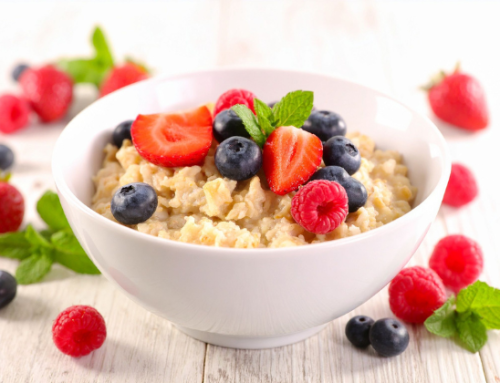
- Dark leafy greens (kale, spinach, Swiss chard)
- Orange vegetables (carrots, sweet potatoes, squash)
- Colorful produce close to their raw form
Pro tip: Eat these with healthy fats since vitamin A is fat-soluble.
Supplements: The Truth
Let me save you some money. Most vision supplements are overhyped, but two compounds have solid research behind them:
Lutein: Has been found to be beneficial, but only for people with moderate to severe macular degeneration. If your vision is normal or you have mild deficits, save your money.
Astaxanthin: This is the red-pink pigment found in certain fish like salmon. Astaxanthin increases blood flow to the eyes, which means healthy oxygen and nutrients getting to these metabolically hungry cells.
Bottom line: Real food trumps supplements almost every time.
The Cardiovascular Connection
Here’s something most people miss: the cells in your retina are the most metabolically active in your entire body. These energy-hungry tissues need constant blood flow to function.
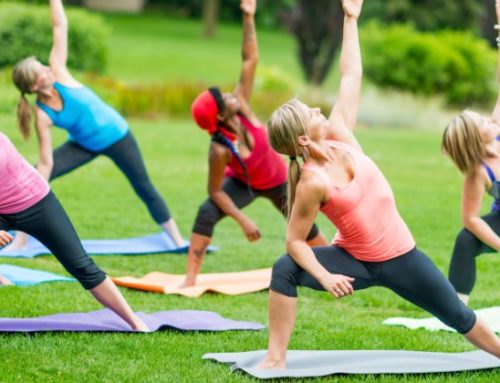
This means, your cardiovascular health directly impacts your vision. Regular exercise, strength training, and yes, even cold exposure (hello, cold showers!) support healthy blood flow to your eyes.
It’s all connected, beautiful people.
Question everything…
Look, I’m not anti-optometrist or anti-glasses. There are absolutely times when corrective lenses are necessary and life-saving. But I am pro-questioning the narrative that declining vision is inevitable.
What if — just what if — we could maintain healthy vision longer by living more aligned with our biology? By spending time outdoors, exercising our visual system, and nourishing our bodies properly?
My commitment: I’m going to keep doing what I’m doing to see how long I can maintain my glasses-free life. Not because I’m stubborn (okay, maybe a little), but because I believe our bodies are designed to thrive, not just survive.
Your eyes aren’t just windows to your soul — they’re sophisticated pieces of brain tissue that have been taking care of you for decades. Now it’s time to head outside, and return the favour.
“Vision is the art of seeing what is invisible to others.”
Jonathan Swift
The information in this newsletter is for educational purposes only and not intended as medical advice. Always consult with a healthcare professional for personal health decisions. This post may contain affiliate links, and I may earn a small commission if you make a purchase, at no extra cost to you.




Leave a Reply